SEMS Monitoring Planning Guide
A useful monitoring brief explains what people need to know and where the required information comes from. Begin with a small set of operational questions rather than a list of every point that might be collected. The brief should make a demonstration specific enough to establish what works for the intended installation.
Describe the measurement boundary
Identify whether each source measures inverter output, a panel, the grid connection or another defined point. Record units and sign conventions. If a value is calculated, identify the inputs and the proposed method. Do not assume that a total represents consumption or an energy balance without checking the electrical context.
List the equipment and available points
Prepare actual device models and interface documentation for technical review. Identify the measurements your team already receives and those it wants to add. Separate electrical values, device-reported status and communication information so that each can be assessed on its own terms.
Define time and availability
Agree on reporting expectations and the meaning of stale or missing data. A live reading and a historical total may have different collection assumptions. Establish the periods needed for routine review and confirm the available historical coverage before selecting a reporting workflow.
Plan the operator journey
Describe where a routine check starts and what evidence is needed for the next step. A site observation may lead to an inverter comparison, a meter profile or an alarm record. The device monitoring solution and platform screenshots provide concrete views for this discussion.
Set acceptance questions
Can a user find the correct source, understand its unit and judge whether it is current? Does a historical comparison use a complete and suitable period? Can an observation be handed to a local operator with clear context? These questions help evaluate usefulness without inventing performance guarantees.
Request a technical demo with a non-sensitive brief. Exact interfaces, permissions, hosting and report outputs require review. This guide does not authorize changes to equipment or provide a substitute for site operating procedures.
Frequently asked questions
What should be defined before connecting site data?
Agree on the equipment inventory, measurement points, units and timestamps needed by the monitoring workflow. Identify where each reading originates and how missing or stale data will be recognized.
Does this guide confirm support for a particular protocol or manufacturer?
No. Compatibility must be assessed for the actual equipment and installation. This public guide does not publish an approved protocol or manufacturer list.
Why is communication status important to data interpretation?
A stale reading may indicate a communication problem rather than a change in electrical operation. Reviewing freshness alongside the value helps the team decide what to investigate next.
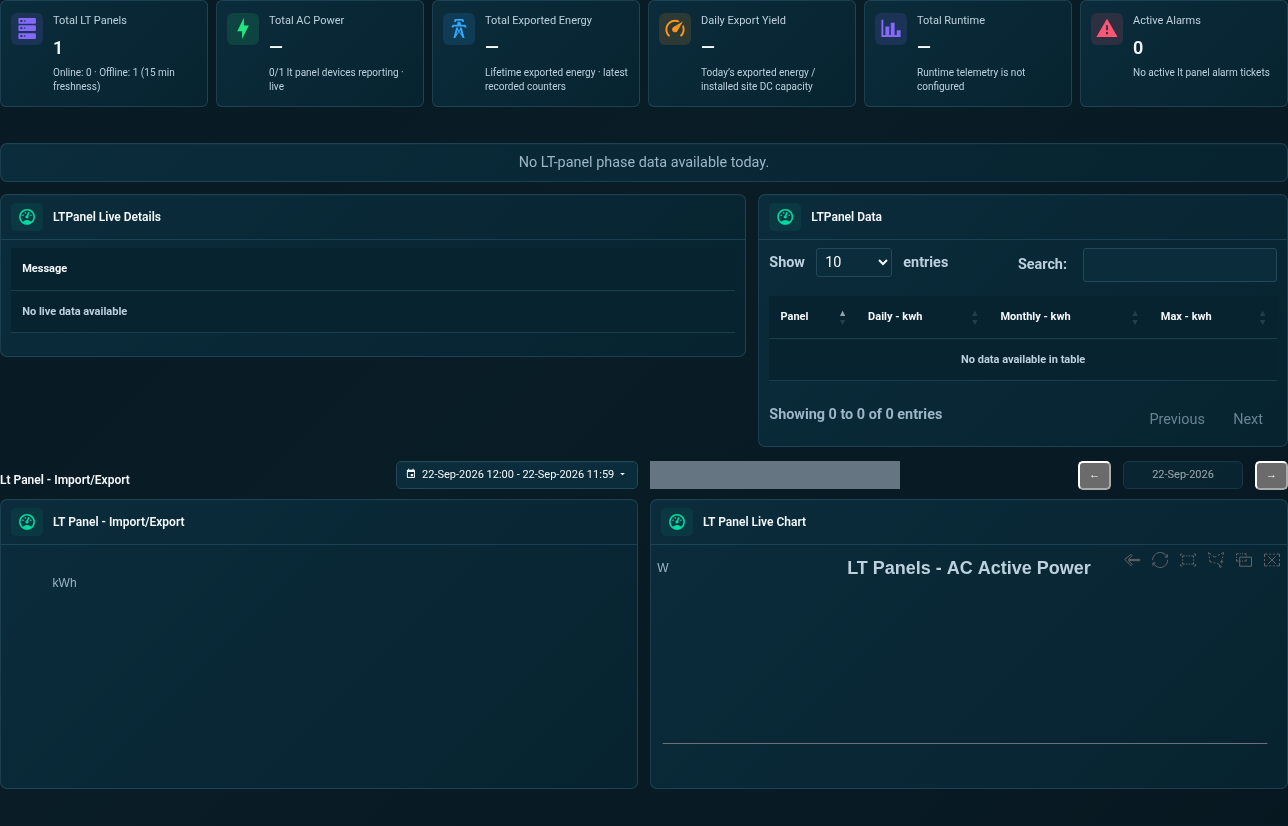
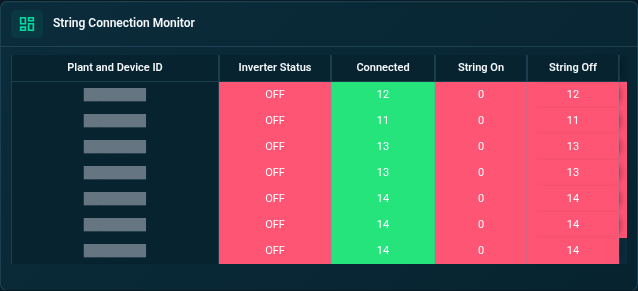
Real SEMS application screens. Private information has been masked; readings reflect the capture time.
SEMS PLATFORM · 01
Device Profile · General Information
Inspect inverter electrical measurements, running status and MPPT voltage/current information in General Information.

SEMS PLATFORM · 02
Inverter String Connection Monitor
Review connected strings and inverter status in the string connection monitor.
SEMS PLATFORM · 03
Site Dashboard · LT Panel
Review LT panel power, phase voltage, current, frequency, import/export history and trend charts.